
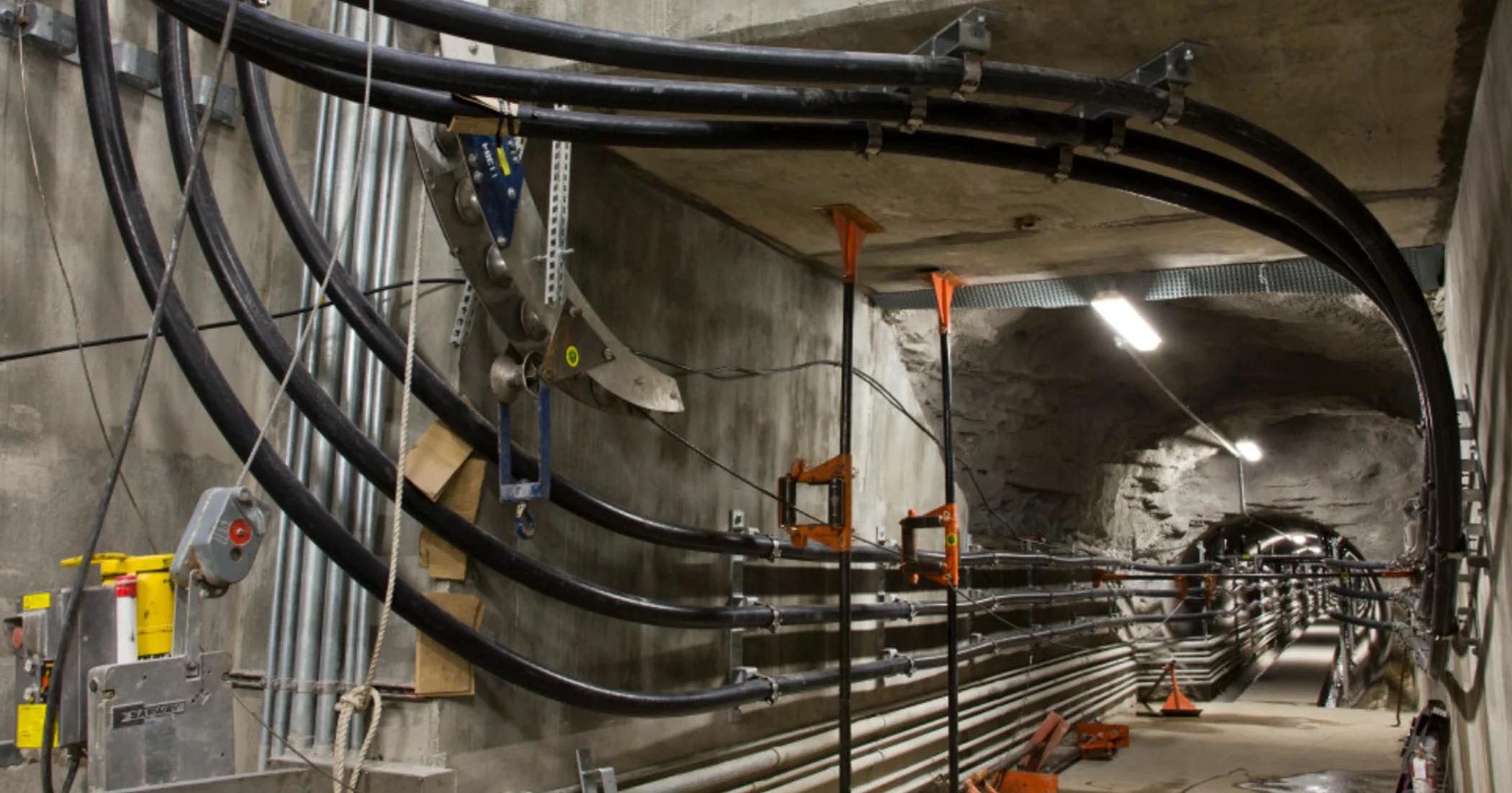
ELECTRICAL DISTRIBUTION DESIGN.
BOTH SIDES OF THE METER.
SLC designs and permits electrical distribution systems from 120V to 60kV, overhead and underground, on the utility side and the customer side of the meter. One licensed Electrical Engineer of Record, from the load study to the permit set.
80+ projects and $350M+ in total site construction value supported, including utility-side distribution for PG&E, the U.S. Air Force, and the U.S. Space Force.









Experts in electrical distribution design and engineering
Electrical distribution design is the engineering of how power moves from the utility service into and through a site, covering the service, the feeders, the protection, and the overhead or underground infrastructure that carries the load. SLC Energy Solutions designs and permits distribution from 120V to 60kV across California, Oregon, Nevada, and Washington, with every project engineered and signed under a single licensed Electrical Engineer of Record.
What sets the work apart is that SLC engineers both sides of the meter: the utility-side service and distribution, including work as a PG&E-Qualified Applicant Designer, and the customer-side site design behind it. The two halves of a distribution project move together instead of waiting on each other.
Distribution design and permit drawings
SLC produces the full distribution package: load and capacity studies, single-line diagrams, service and feeder design, protection and coordination, metering, and the permit-ready construction drawings the authority having jurisdiction and the serving utility approve.
Every set is engineered to the National Electrical Code (NFPA 70) and the serving utility's construction standards, because a drawing that clears local plan check but fails the utility's review has not actually moved the project forward. SLC designs to both from the first sheet.
Because one licensed engineer owns the whole package, the design the contractor builds from is the same design the utility and the AHJ approved. There is no handoff gap where a drafter's assumption survives into the field.
Medium voltage distribution, overhead and underground
Medium voltage distribution carries power above 1,000 volts, between low-voltage building power and high-voltage transmission, and it is where most commercial, industrial, and utility primary service lives. Power steps down a voltage ladder on its way to a site: transmission at 115kV and above, subtransmission at roughly 34.5kV to 69kV, distribution from 2.4kV to 35kV, and the service voltage, 120V to 600V, that buildings use. SLC designs medium voltage distribution up to 60kV, overhead on pole lines or underground in duct banks.
Overhead work includes pole-line design and pole-line replacements built to the serving utility's standards. Underground work covers duct bank design, manhole and vault layout, conductor and conduit sizing, and the routing that keeps a system within capacity and clear of conflicts. SLC also engineers customer-owned primary service, where a site takes power at primary voltage and owns the equipment past the point of delivery.
Utility coordination and PG&E Applicant Design
Utility coordination is the work of getting a site's electrical service designed, approved, and energized by the serving utility, and it is usually the longest pole in a distribution project. SLC opens it at the start and runs it in parallel with the site design across PG&E, SCE, SDG&E, and SMUD in California, and the serving utilities where the work reaches Oregon, Nevada, and Washington.
SLC is a PG&E-Qualified Applicant Designer (QAD). Under PG&E's Applicant Design program, established by CPUC Decision 97-12-099, a qualified firm prepares the utility-side distribution design directly and submits it to PG&E for review rather than waiting in the utility's internal design queue. SLC Energy Solutions appears on PG&E's Qualified Applicant Designer List for electric work, covering Rule 15, Rule 16, and Rule 29 service applications, so the utility-side design and the customer-side design can move under one firm.
Designing the utility side and the customer side together is where the schedule is won or lost. When the same engineer carries both, the service application, the utility-standard design, and the site drawings stay consistent, and the review that releases a connection has one point of accountability.
Service and capacity planning
Service and capacity planning is the engineering that sizes a site's electrical service to the load it actually has to carry, now and as it grows. It starts with a load study that establishes real demand, because an undersized service forces an expensive upgrade later and an oversized one wastes capital up front.
SLC scopes the service, the metering, and the upgrade path so a site's electrical capacity matches its plan, whether that is a single new building or a phased development that adds load over years. On high-load sites, the capacity question often pulls in storage and demand management, which is where distribution design connects to SLC's battery storage and microgrid work.
Government and utility distribution work
Government and utility distribution work is electrical distribution engineering for public agencies, military installations, and the utilities themselves, where the design answers to federal or utility construction standards on top of local code. SLC has engineered distribution for PG&E, the U.S. Air Force at Beale AFB, and the U.S. Space Force at Vandenberg, along with public and quasi-public clients including San Jose Water and Siskiyou Telephone.
This work rewards an engineer who reads a standard set closely and designs to it the first time, because the review cycles on government and utility projects are long and unforgiving.
What distribution design costs, and what drives it
The cost of an electrical distribution project is driven by the site, not by a flat rate: the existing service, the new load, how much utility work the connection triggers, and whether the run is overhead or underground. The largest single cost lever is sizing the service correctly the first time, which is why the engineering starts with a load study before anyone prices construction.
SLC scopes the load and the utility path up front so the budget reflects the real site rather than a placeholder.
A distribution record across four states
SLC has supported 80+ projects and more than $350M in total site construction value across California, Oregon, Nevada, and Washington, including utility-side distribution for PG&E and government distribution for the U.S. Air Force and U.S. Space Force.
The distribution clients span utilities, the military, casinos, telecom, water utilities, lodging, and biomass energy, overhead and underground, from low voltage through 60kV. It is a record built on the customer side and the utility side of the meter, the combination most engineering firms do not carry.
Scoping a distribution or service project?
Send the site, the load, and the utility status. The engineer of record reviews it personally.
Who engineers your project
Engineered by Frank Sylvester, P.E.
Frank Sylvester is a licensed Electrical Professional Engineer who designs distribution on both sides of the meter: utility primary service and pole-line work built to PG&E standards, plus the customer-side feeders, switchgear, and service behind it. On an SLC distribution project, the engineer who runs the load study and the utility coordination is the engineer who signs the permit set. The utility-side and customer-side designs answer to one Engineer of Record, not two firms pointing at each other when the schedule slips.
More about Frank and SLCCommon questions
What does an electrical distribution engineer do?
What is electrical distribution design?
What is considered medium voltage?
What is a feeder in electrical distribution?
What is utility coordination, and what is PG&E Applicant Design?
How much does an electrical service upgrade cost, and what does it involve?
What are the four types of electrical distribution systems?
Start a project
Tell us what you’re building.
Send the site, the load, and the timeline. The engineer of record reviews every inquiry personally.
Related services
The rest of the engineering this project touches.
EV Charging Infrastructure
The customer-side charging design that sits on top of the distribution service SLC engineers.
Battery Energy Storage Systems (BESS) & Microgrids
Storage and microgrid design that manages demand and keeps high-load sites within their service limits.
Owner's Engineer & Project Services
Independent engineering oversight that protects the owner's interest through construction.
Photometric & Lighting Design
Site and area lighting designed for safety, code, and the electrical load it adds.
Title 24 & Code Compliance
California energy code compliance built into the design, not bolted on at plan check.
Expert Witness & Forensic Engineering
Licensed electrical testimony and forensic analysis when a project ends up in dispute.