
PHOTOMETRIC PLANS AND SITE LIGHTING DESIGN.
ENGINEERED TO THE FOOT-CANDLE.
SLC designs site lighting the way it designs the rest of the electrical system: photometric calculations to IES recommendations, glare and light trespass controlled on every plan, and the permit set signed by the licensed Electrical Engineer of Record who carries the site's power.
80+ projects and $350M+ in total site construction value supported across CA, OR, NV, and WA, with site lighting engineered inside the same electrical scope by the licensed P.E. who carries the site's power.
Experts in photometric and site lighting design
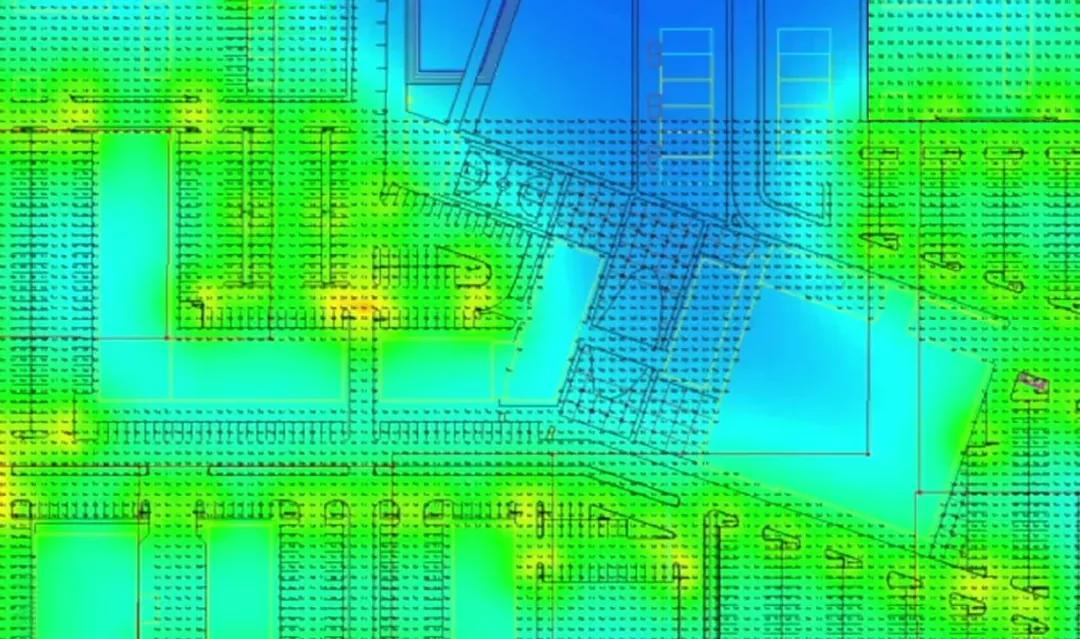
A photometric plan is a scaled site drawing that models the light levels a proposed lighting design will produce, point by point, before anything is installed. SLC Energy Solutions prepares photometric plans, studies, and full site lighting designs across CA, OR, NV, and WA: parking lots, fleet yards, charging canopies, security and interior lighting, and the lighting controls behind them. Every plan is engineered and signed by a licensed Electrical Engineer of Record.
Lighting is an electrical load and a code item before it is a layout. Because SLC designs the site's power as well as its lighting, the photometric plan, the circuits, and the controls arrive as one engineered package, and plan-check comments get answered by the engineer who designed all of it.
Photometric plans and studies
A photometric study is the calculation behind a lighting design: each fixture is modeled from its manufacturer's IES photometric data file, and the analysis returns a foot-candle grid across the site plus the summary values plan checkers read first, average level, maximum, minimum, and the uniformity ratios between them.
SLC prepares photometric plans, studies, surveys, and analysis for new construction, retrofits, and existing sites under review. The deliverable is a permit-ready plan: luminaire schedule, fixture locations and mounting heights, the point-by-point grid, and the statistical summary the jurisdiction's ordinance asks for.
Because the engineer who runs the photometric calculation also designs the circuits, panels, and controls behind the fixtures, the lighting plan and the electrical drawings ship in one permit set and answer plan check with one voice.
Site and parking lot lighting design
Parking lot lighting design sets fixture selection, pole heights and spacing, and aiming so a lot meets its required light levels and uniformity without glare or wasted light. The requirements pull in two directions at once: enough light for safety and security, and hard limits on trespass, glare, and pole height from the local ordinance. The photometric plan is where a design proves it satisfies both.
SLC designs full site illumination plans for parking lots, fleet yards, and commercial sites across CA, OR, NV, and WA: fixture and optic selection, pole layout, lighting zones for 24/7 operations versus after-hours curfews, and the documentation local ordinances and California's Title 24 outdoor lighting provisions require. Fleet yards get particular attention, because round-the-clock operations push light levels up while neighboring parcels push them down, and the design has to hold both. Our guide to California Title 24 explains the outdoor-lighting limits and the 2025 code updates.
Foot-candles and IES light levels
A foot-candle is the unit of illuminance equal to one lumen of light falling on one square foot of surface, and it is the measure lighting requirements in the United States are written in. The Illuminating Engineering Society (IES) publishes the recommended practices that set those levels by activity and location, from parking facilities to building entries, and most ordinances and security standards reference them.
SLC designs to IES recommended levels and documents the result in the photometric plan: the calculated grid shows the foot-candle value at every point, and the summary table shows the averages and uniformity ratios the recommendation calls for. When a jurisdiction writes its own numbers into the ordinance, the stricter requirement governs and the plan says so explicitly.
Glare, light trespass, and dark-sky compliance
Light trespass is light that falls beyond the property it is meant to illuminate, onto neighboring parcels or into the night sky. Glare is its on-site companion: luminance high enough to impair vision rather than aid it. Both are design failures, and both are increasingly written into local ordinances as hard limits measured at the property line.
Every SLC lighting plan controls glare, light trespass, and adjacent-property impact by design: fully shielded and full-cutoff fixtures where the ordinance or the site calls for them, optics and aiming chosen to keep light on the task, and property-line calculations included in the photometric plan so compliance is demonstrated, not asserted. For sites near rural or protected areas, SLC designs to dark-sky requirements: no uplight, controlled color temperature, and light levels no higher than the task requires, consistent with the five lighting principles published by DarkSky International.
Charging canopy and security lighting
Charging canopy lighting illuminates EV charging bays under the canopy deck so drivers, connectors, and screens are clearly visible at night without throwing glare into the surrounding lot. It is a distinct design problem: low mounting heights, reflective vehicle surfaces, cameras and payment systems that need even light, and a canopy structure that is often also carrying photovoltaic panels.
SLC designs charging-site lighting as part of the same electrical scope as the chargers themselves, from the canopy luminaires to the site lighting that carries a driver safely from the stall to the building. Security lighting follows the same discipline: uniform, low-glare light that supports cameras and sightlines, designed to IES security recommendations rather than the brute-force floodlighting that creates shadows and trespass complaints.
Interior lighting, controls, and path of travel
Path-of-travel illumination is the code-required lighting along the routes people use to enter, exit, and move through a site, including the egress lighting that must stay lit when normal power fails. It is one of the items plan checkers verify on every project, and one of the easiest to get wrong when lighting is designed apart from the electrical system that feeds it.
SLC's lighting scope runs interior as well as exterior: tenant and back-of-house lighting, lighting controls, and the emergency and egress systems the building code requires. Controls are engineered into the design rather than added after: occupancy sensors, daylighting, and scheduling that satisfy California's Title 24 control requirements and cut operating cost on every site, in every state SLC serves.
From lighting ordinance to building permit
Most jurisdictions require a photometric plan with any permit application that adds or changes exterior lighting. The path runs from the ordinance to the approved set: read the local lighting code and any dark-sky overlay, select fixtures and optics from manufacturer IES files, run the point-by-point calculation, document the property-line values, and submit the plan inside the electrical permit set.
What a photometric plan costs depends on the site, not a flat rate: the acreage and fixture count, whether the jurisdiction requires property-line and uniformity documentation, and how many design rounds the ordinance forces. Because SLC's lighting plans ship inside the same permit set as the electrical drawings, signed by the same licensed Engineer of Record, plan-check comments land on one desk and get answered once, instead of bouncing between a lighting supplier and an electrical engineer who have never met.
Need a photometric plan for a permit?
Send the site, the ordinance, and the timeline. The engineer of record reviews it personally.
Who engineers your project
Engineered by Frank Sylvester, P.E.
Frank Sylvester is a licensed Electrical Professional Engineer who treats lighting as what it is on a construction site: an electrical load, a code item, and a safety system. On an SLC lighting project, the engineer who runs the photometric calculations is the engineer who sizes the circuits, panels, and controls behind the fixtures, and who signs the permit set the jurisdiction reviews, from a parking lot retrofit to a full site illumination plan.
More about Frank and SLCCommon questions
What is a photometric plan?
What is a photometric study?
Who prepares a photometric plan?
How do you read a photometric plan?
What is a foot-candle?
What are parking lot lighting requirements?
What is dark-sky compliant lighting?
Start a project
Tell us what you’re building.
Send the site, the ordinance, and the timeline. The engineer of record reviews every inquiry personally.
Related services
The rest of the engineering this project touches.
EV Charging Infrastructure
Charging canopies and site lighting are designed together, under one Engineer of Record.
Electrical Distribution Engineering
The service, feeders, and panels every lighting load runs on.
Battery Energy Storage Systems (BESS) & Microgrids
Storage and microgrid design for the sites where lighting is one load among many.
Owner's Engineer & Project Services
Independent engineering oversight that protects the owner's interest through construction.
Title 24 & Code Compliance
California energy code compliance built into the design, not bolted on at plan check.
Expert Witness & Forensic Engineering
Licensed electrical testimony and forensic analysis when a project ends up in dispute.